

This week at Connection Group we're going to be looking at both chapters 3 and 4 of Crazy love. But I think I'll leave the chapter 4 video until Wednesday to provide some further reflection on a rough topic.
Before group tomorrow night, I hope you've read both chapters, but watch this video on chapter 3 so the image of God's desire for intimacy is fresh in your minds.
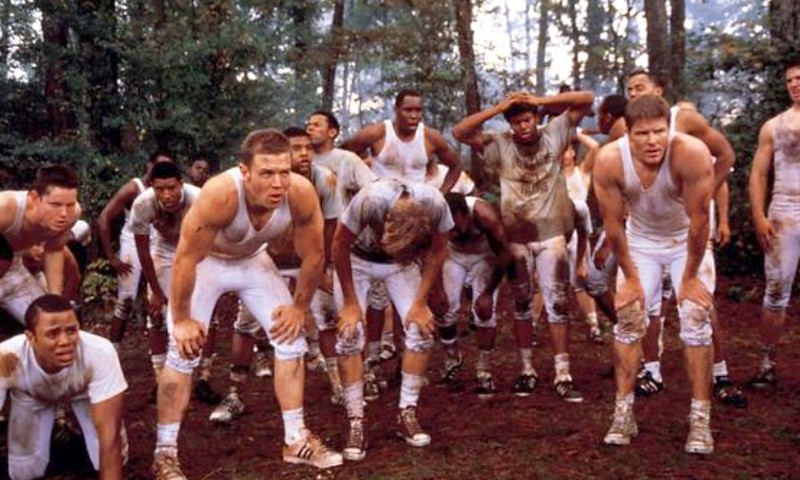
Remember 'Remember the Titans'?
Culture change is tough - but it is worth it!!! I was reminded of this as I watched the movie Remember the Titans. A coach dropped into a chaotic situation must bring culture change for the team to survive... but he doesn't just want it to survive he wants it to succeed, and to dominate. In a way we want our ministries to do likewise so what ideas for culture change can we take from Coach Boon?
Thinking about sacrifice
If Jesus is King, what does that mean for what we want to do with out lives? [Image by Chris Bellerophon Dotson on flickr]

Back to the Mission
Reminded again and again about what we are created for. We are created for worship! But because there are some people who do not worship, we have been given a mission... to go and show people they were created to worship! - photo on Flickr by llamatofu
Appeasement verses Satisfaction
Do we look to appease our emotions, troubles, discomforts with earthy things that may provide some release temporarily, or do we look to God who is the source of complete satisfaction? [Image by donald_palansky_photography on flickr]

Monday, 22 October 2012
Holidays - actually having a break.
Well I'm back from just over 2 weeks off work, and have enjoyed stopping for a period of time. This is my first break since beginning as Youth Pastor at Deception Bay Baptist in February and the thing I noticed most was how much my mind needed a break.
People think Pastors just sit in their office, write sermons, drink coffee, counsel people and plan events. But there is so much more than that. I realised over my holidays that while I am working I am constantly thinking about 'church things'. I mean all the time, every part of the day and night, even on my days off. My mind constantly works through conversations I've had, or need to have, devotions that will be done, sermon ideas, or just random things and how they could be used as illustrations for devotions or sermons.
On my first day of holidays I realised I had nothing to do for the next two weeks, and my mind relaxed - I didn't start considering things coming up in a few weeks time, I didn't see some amazing thing of nature and immediately start thinking how I could use that to share the Gospel with someone. My mind had a break, and I was able to see these things and think about their affect on me personally.
I now have a much greater appreciation of how my mind has been working as I work as a pastor. I will be more conscious to give myself a break, but if you are not a pastor, then spare a thought for your pastor and understand the stress the calling puts on every aspect of their life - even recognition of this helps I think.
Wednesday, 3 October 2012
I am not forgotten
For those who didn't make it to Clontarf Baptist last Friday this is what you missed.
My heart aches for these kids - I have such a passion for the work Watoto do. To think each of these children have lost one or both parents to AIDS or war, yet still sing to Jesus that they "are not forgotten" is incredible.
Jesus saves, and these kids remind me more of that than almost any other thing.
Tuesday, 2 October 2012
How Great is Our God - World Edition
For those who missed it on Sunday night here's the video we started the service with.
It was an amazing experience to watch this live earlier in the year. Realising how many people were worshiping God world wide at the same time, via the amazing technology of live streaming, gave the feeling of the entire Church worshiping its God at the same time. The phrase "How Great is our God" trended world wide on Twitter during this session of the Passion Conference 2012. It was incredible, unifying and glorifying to God. I still get shivers on my spine when I watch this video.
It was an amazing experience to watch this live earlier in the year. Realising how many people were worshiping God world wide at the same time, via the amazing technology of live streaming, gave the feeling of the entire Church worshiping its God at the same time. The phrase "How Great is our God" trended world wide on Twitter during this session of the Passion Conference 2012. It was incredible, unifying and glorifying to God. I still get shivers on my spine when I watch this video.
Friday, 28 September 2012

Friday morning focus
Therefore, since we are surrounded by so great a cloud of witnesses, let us also lay aside every weight, and sin which clings so closely, and let us run with endurance the race that is set before us, looking to Jesus, the founder and perfecter of our faith, who for the joy that was set before him endured the cross, despising the shame, and is seated at the right hand of the throne of God.
(Hebrews 12:1-2 ESV)
Wednesday, 26 September 2012
Ever think you never get anything good?
"If we are legitimate children of Almighty God, we have a pretty ridiculous upside. Grow up into His greatness and love." ~ Louie Giglio
We've got the good deal - no matter how you look at it.
Tuesday, 25 September 2012
Check your fuel.
 A car might have a new engine, great body work, smart looking interior... but with no fuel in the tank, no one's going to expect it to get very far. It's the fuel that allows it to reach its destination. If we want to get ahead in life, we need to spend less time on our outward appearance. We need to be more concerned with what's going on inside, making sure the tank of our lives is constantly topped up with the right fuel. Just like if you fill a car up with rotten fuel it isn't going to run right (or at all), filling our lives with the wrong thing will also cause us pain. Many times we find ourselves in rotten situations and wonder how we got there - sometimes things are just unfair, but other times what we put in leads us to trouble.
Life often doesn't turn out as we think it will, so how do we keep going through disappointment and confusion?
"Now faith is the assurance of things hoped for, the conviction of things not seen."
Hebrews 11:1 ESV
Making sure the fuel we fill our life with is full of faith is essential to leading a life according to God's purpose. If we are living according to God's purpose then we will not find ourselves in self-induced trouble.
After going through a list of great examples of faith, the writer of Hebrews sums up our position like this:
"Therefore, since we are surrounded by so great a cloud of witnesses, let us also lay aside every weight, and sin which clings so closely, and let us run with endurance the race that is set before us, looking to Jesus, the founder and perfecter of our faith, who for the joy that was set before him endured the cross, despising the shame, and is seated at the right hand of the throne of God."
Hebrews 12:1-2 ESV
Jesus is the founder, the very foundation, of our faith; but he is also it's perfecter. There is nothing greater than Jesus, no 'extra knowledge'; no purer fuel. Fill yourself up with faith in Jesus, and see how your life runs.
Monday, 24 September 2012
Healthy Habits
I like the story of the little boy who fell out of bed. When his Mom asked him what happened, he answered, "I don't know. I guess I stayed too close to where I got in."
Easy to do the same with our faith. It's tempting just to stay where we got in and never move.
Pick a time in the not-too-distant past. A year or two ago. Now ask yourself a few questions. How does your prayer life today compare with then? How about your giving? Have both the amount and the joy increased? What about your church loyalty? Can you tell you've grown? And Bible study? Are you learning to learn?...
There they are. Four habits worth having. Isn't it good to know that some habits are good for you? Make them a part of your day and grow. Don't make the mistake of the little boy. Don't stay too close to where you got in. It's risky resting on the edge.Max Lucado "Let the Journey Begin" p27
Good practical advice there. How's your survey of where you were a few years ago?
Kid's Ministry is Important.
Recently I was asked to provide the number of people who are under 18, not connected with our church, yet would come in contact with one of our ministries each week. Amidst the business of the week I quickly tallied up the numbers in each of our groups and replied back ‘approximately 200’. Then I stopped and looked at that number… 200!... that couldn’t possibly be right, it appeared way too high.
So I revisited my tally; thought about each group; and realised that yes, 200 is a valid idea of how many people under 18 come in contact with our church each week. The biggest contributor to this is R.E in D’Bay State School, with 4-6 classes of 25-30 students each week. Then we can add in KidsHope, youth group, boy’s club, kid’s club and kid’s time who all have a number of ‘youth’ who aren’t already connected to our church and suddenly a number like 200 is a reality. It really opened my eyes to what a huge target area of ministry we have in evangelism when it comes to children and teenagers. However all these ministries are struggling to get the help and leadership they need to run effectively.
 It amazes me the connection we have with young people in our community, even though it doesn't appear to be a main focus in the way we do things. Most people in the church would not be involved in children's or youth ministry, yet our impact is still great. But I wonder if it is sustainable without more help. With no leaders next year some of those ministries will have to either change or close down entirely. I'm praying for more to step up - since it's apparent God has been working with the young people in Deception Bay.
Sunday, 23 September 2012
Jesus Son of God.
Cannot escape this song, or it's lyrics at the moment - God is speaking and I am being blown away.
Jesus Son of God - Chris Tomlin
You came down, from heaven's throne
This earth You formed, was not Your home
A love like this, the world had never known
A crown of thorns, to mock your name
Forgiveness fell upon Your face
A love like this, the world had never known
On the altar of our praise let there be no higher name
Jesus Son of God
You laid down Your perfect life, You are the sacrifice
Jesus Son of God
You are Jesus Son of God
You took our sin You bore our shame
You rose to life You defeated the grave
A love like this, the world has never known
You took our sin You bore our shame
You rose to life You defeated the grave
A love like this, the world has never known
On the altar of our praise let there be no higher name
Jesus Son of God Y
ou laid down Your perfect life You are the sacrifice
Jesus Son of God
You are Jesus Son of God
Be lifted higher than all You've overcome
Your name be louder than any other song
There is no power that can come against Your love
The cross was enough
The cross was enough
Friday, 21 September 2012
Friday morning focus
The proverbs of Solomon, son of David, king of Israel:
To know wisdom and instruction,
to understand words of insight,
to receive instruction in wise dealing,
in righteousness, justice, and equity;
to give prudence to the simple,
knowledge and discretion to the youth—
Let the wise hear and increase in learning,
and the one who understands obtain guidance,
to understand a proverb and a saying,
the words of the wise and their riddles.
The fear of the LORD is the beginning of knowledge;
fools despise wisdom and instruction.
(Proverbs 1:1-7 ESV)
Tuesday, 18 September 2012
Using Technology for Ministry and Mission
I just watched a live stream of the Passion 2013 Link Night. There was praise music, prayer, Louie Giglio preached and there was even a Skype chat between him and another preacher. All this took place in Atlanta, Georgia in the USA. Yet I could sit and be involved while I wrote my Bible study for tonight's group in my office in Deception Bay.
Technology is incredible! Let's not take it for granted! Even these studies we are going through with the dBay youth and young adults rely heavily on technology. We watch DVD segments each week, there are videos on youtube to watch for each chapter, and even in writing the book Francis Chan directs you to webpages and videos.
I think I'm being slightly overwhelmed at how good some people use technology in their ministries. Are we a bit afraid to in our day-to-day local ministries? I sometimes wonder if we are. We may not have the resources 268Generation or Francis Chan have, but I'm beginning to have a think about how we could possibly use it better, even here in dBay.
Monday, 17 September 2012
Crazy Love - Chapter Two
Here's the online video for chapter 2 of Crazy Love. It might be good to watch this one before you read the chapter just to give you some insight into how it's going to go. Though if you've been reading the chapter through the week just stop for a bit now and watch this video.
Support or Employment?
What role does a congregation have in the calling of a pastor?
Is a pastor simply applying for a job, and offered employment by the congregation, in turn then working for the congregation as they see fit? Or when a pastor recognises a call to a congregation must there also be some level of call on the congregation as well to say that they see the pastor as God-lead to come and lead, look after and shepherd them? If that's the case then should the congregation allow the pastor to work as he feels led by God (having already recognised God's call), and the money they pay him is not then employment, but support?
Is a pastor simply applying for a job, and offered employment by the congregation, in turn then working for the congregation as they see fit? Or when a pastor recognises a call to a congregation must there also be some level of call on the congregation as well to say that they see the pastor as God-lead to come and lead, look after and shepherd them? If that's the case then should the congregation allow the pastor to work as he feels led by God (having already recognised God's call), and the money they pay him is not then employment, but support?
Sunday, 16 September 2012
Just Stop and Think
Here's a 15 minute video that changed my week. We showed it in church this morning and I hope it impacted the congregation. It's not earth shatteringly new information, but it is earth shattering when you stop to think what it means for our lives.
Well at least it was for me.
Well at least it was for me.
Friday, 14 September 2012
Friday morning focus.
Guard your steps when you go to the house of God. To draw near to listen is better than to offer the sacrifice of fools, for they do not know that they are doing evil. Be not rash with your mouth, nor let your heart be hasty to utter a word before God, for God is in heaven and you are on earth. Therefore let your words be few.
(Ecclesiastes 5:1-2 ESV)
Do you think about what you are doing before you approach God in prayer?
Wednesday, 12 September 2012
Is it right to go and see a One Direction concert?
...the good news (if you're a fan) is that this boy band phenomenon of 2012 is rumoured to be returning to Australia for extra concerts later this year.
But before you grab your parent's credit card and head online to buy tickets, it's a good time to stop and ask yourself the question: is it right to go to the One Direction concert?
This article is a great look at how Christians should respond or at least consider the youth culture around them. I hope all my youth can look at the world this way, read the article then practically consider these things with every decision they have to make.
Go check out the article.
http://fervr.net/entertainment/is-it-right-to-see-one-direction-in-concert
Tuesday, 11 September 2012
Responding to the magnificence of God
"I sometimes struggle with how to properly respond to God's magnitude in a world bent on ignoring or merely tolerating Him. But know this: God will not be tolerated. He instructs us to worship and fear Him."
Francis Chan, Crazy Love, p28
Monday, 10 September 2012
Crazy Love - Chapter One
Since we used the Chapter 1 video for the intro study, today I'm posting the "Awe Factor of God" video we're told to go and watch during the chapter.
If you haven't read the chapter yet, do so, then watch this video when Francis mentions it.
If you haven't read the chapter yet, do so, then watch this video when Francis mentions it.
Sunday, 9 September 2012
Sunday Afternoon
What was the main point of your pastor's sermon this morning?
What were his key points? Can you even remember the passage he spoke from?
 As someone you preaches regularly now, I often wonder just what people are taking in, and if they are even listening at all when I preach. I think we need to recognise a call from God to preach his Word. So if you're listening to a preacher, remember he has felt a significant Word from God about the passage he's talking about (well at least I would hope he had). If even a few hours later you can't remember the key points, main theme or even the passage, then have you done him and God a dishonour by not hearing the Word and taking it to heart?
What were his key points? Can you even remember the passage he spoke from?

Sunday Morning
Well it's about 20 minutes before the start of the service here in Deception Bay, I've been preparing the sermon for this evening's service and it's had me thinking about worship. I'm preaching on Exodus 25-27 about all the instructions God gives for the tabernacle, the place where he will dwell and where the Israelites will worship.
In thinking about how it affects us today I have been dwelling a lot on the way we worship. Our focus on services seems ok - God set forth quite an orderly worship schedule - yet it was to be done in an environment of every day obedience. The tabernacle and the law cannot be separated.
How do we link these ideas of obedience and worship in our services today?
Friday, 7 September 2012
Friday morning focus.
What shall we say then? Are we to continue in sin that grace may abound? By no means! How can we who died to sin still live in it? Do you not know that all of us who have been baptized into Christ Jesus were baptized into his death? We were buried therefore with him by baptism into death, in order that, just as Christ was raised from the dead by the glory of the Father, we too might walk in newness of life.
For if we have been united with him in a death like his, we shall certainly be united with him in a resurrection like his. We know that our old self was crucified with him in order that the body of sin might be brought to nothing, so that we would no longer be enslaved to sin. For one who has died has been set free from sin. Now if we have died with Christ, we believe that we will also live with him. We know that Christ, being raised from the dead, will never die again; death no longer has dominion over him. For the death he died he died to sin, once for all, but the life he lives he lives to God. So you also must consider yourselves dead to sin and alive to God in Christ Jesus.
Let not sin therefore reign in your mortal body, to make you obey its passions. Do not present your members to sin as instruments for unrighteousness, but present yourselves to God as those who have been brought from death to life, and your members to God as instruments for righteousness. For sin will have no dominion over you, since you are not under law but under grace.
What then? Are we to sin because we are not under law but under grace? By no means! Do you not know that if you present yourselves to anyone as obedient slaves, you are slaves of the one whom you obey, either of sin, which leads to death, or of obedience, which leads to righteousness? But thanks be to God, that you who were once slaves of sin have become obedient from the heart to the standard of teaching to which you were committed, and, having been set free from sin, have become slaves of righteousness. I am speaking in human terms, because of your natural limitations. For just as you once presented your members as slaves to impurity and to lawlessness leading to more lawlessness, so now present your members as slaves to righteousness leading to sanctification.
(Romans 6:1-19 ESV)
Wednesday, 5 September 2012
Crazy Love - Preface Study
Here's the chapter 1 video for our Crazy Love study. We used this as a bit of an introduction to the book, and I'm now posting this to give you guys an idea of how each week I'll post the video before our Tuesday night Connect Group.
If you weren't there last night check out the video and meditate on some of the ideas.
If you weren't there last night check out the video and meditate on some of the ideas.
Tuesday, 4 September 2012
How can we be too busy for God...
...when God meets us where we are?
This idea really struck me this morning while I was using a rowing machine at the gym (note the self indulgent little promo that yes, I went to the gym this morning :-p). I was working away on this machine with my iPod playing music into my ears. A song came on which had amazingly relevant and worshipful words and I found myself interacting with God, even while I did my workout. I wasn't planning on that, but God came and met me. I just had to be aware of it enough to respond.
I don't know how many times I've heard people say that they're too busy for a devotion time, or to read the Bible. It always annoys me because I see reading God's Word as the priority - cut other things (even work or study) before you cut that. But this morning just highlighted to me how musicians have composed the Word of God into music, and I was able to have a quiet time while rowing at 33 strokes a minute. It may be in the car, or even on the job site - but I don't think we really have any excuse to say we haven't spent some time with God today. Because God has been trying to spend that time with us all day (it doesn't have to be music, God uses so many different ways to get out attention), we may just not have been in tune enough to be aware of it
Monday, 3 September 2012
What will happen, what do we do about it?
You are in your car driving home. Thoughts wander to the game you want to see or meal you want to eat, when suddenly a sound unlike any you've ever heard fills the air. The sound is high above you. A trumpet? A choir? A choir of trumpets? You don't know, but you want to know. So you pull over, get out of your car, and look up. As you do, you see you aren't the only curious one. The roadside has become a parking lot. Car doors are open, and people are staring at the sky. Shoppers are racing out of the grocery store. The Little League baseball game across the street has come to a halt. Players and parents are searching the clouds.
And what they see, and what you see, has never before been seen.
As if the sky were a curtain, the drapes of the atmosphere part. A brilliant light spills onto the earth. There are no shadows. None. From whence came the light begins to tumble a river of color - spiking crystals of every hue ever seen and a million more never seen. Riding on the flow is an endless fleet of angels. They pass through the curtains one myriad at a time, until they occupy every square inch of the sky. North. South. East. West. Thousands of silvery wings rise and fall in unison, and over the sound of the trumpets, you can hear the cherubim and seraphim chanting, "Holy, holy, holy."
The final flank of angels is followed by twenty-four silver-bearded elders and a multitude of souls who join the angels in worship. Presently the movement stops and the trumpets are silent, leaving only the triumphant triplet: "Holy, holy, holy." Between each word is a pause. With each word , a profound reverence. You hear you voice join in the chorus. You don't know why you say the words, but you know you must.
Suddenly, the heavens are quiet. All is quiet. The angels turn, you turn, the entire world turns - and there he is. Jesus. Through waves of light you see the silhouetted figure of Christ the King. He is atop a great stallion, and the stallion is atop a billowing cloud. He opens his mouth, and you are surrounded by his declaration: "I am the Alpha and the Omega."
The angels bow their heads. The elders remove their crowns. And before you is a figure so consuming that you know, instantly you know: Nothing else matters. Forget stock markets and school reports. Sales meetings and football games. Nothing is newsworthy. All that mattered, matters no more, for Christ has come...
Max Lucado, "When Christ Comes", p xv, xvi
Lucado paints a lovely picture on what the return of Jesus may look like. If nothing else is going to matter at that point, what does that say about our priorities now?
Friday, 31 August 2012
Friday afternoon at the church
The sky looks great out over Deception Bay this evening. Just thought I'd share.

Friday morning focus
Save, O LORD, for the godly one is gone;
for the faithful have vanished from among the children of man.
Everyone utters lies to his neighbor;
with flattering lips and a double heart they speak.
May the LORD cut off all flattering lips,
the tongue that makes great boasts,
those who say, “With our tongue we will prevail,
our lips are with us; who is master over us?”
“Because the poor are plundered, because the needy groan,
I will now arise,” says the LORD;
“I will place him in the safety for which he longs.”
The words of the LORD are pure words,
like silver refined in a furnace on the ground,
purified seven times.
You, O LORD, will keep them;
you will guard us from this generation forever.
On every side the wicked prowl,
as vileness is exalted among the children of man.
(Psalm 12 ESV)
Wednesday, 22 August 2012
Studying Crazy Love
Here's the next book study we're doing with dBay Young Adults and Youth. This should take us through to the end of the year and I'm hoping inject a good dose of passion and focus into us as we head into a holiday break and new year.
I read Francis Chan's Crazy Love at the beginning of the year. I really enjoyed the book and was challenged by its content. Recently I've seen the immense amount of online content Chan created to accompany the book as well as another 'study' guide and DVD. I'm hoping by using all of these tools I can create a study on the book tailored for where we are in Deception Bay right now.
Check out the video, I think its a great book to study in home groups and could be used in most contexts.
Tuesday, 21 August 2012
Motivating a Spiritual Workout
 Gyms are a place where we group together a whole heap of exercise machines in one spot so you can do a range of physical workouts at your own convenience. In recent years the gym industry has boomed. Why? Well I think it's having a location to go to, which you pay for, away from your home that motivates you to actually go and do a physical workout. At home it's too easy to relax and slack off. But if you know you're having 90 minutes at the gym, most of that will be used up on the machines. Plus if your paying $10 or more a week for the privilege of using that equipment you're going to want to go numerous times a week so you get your money's worth. In the lifestyle of today people are paying for that 'motivation' just as much as they're paying for state-of-the-art exercise equipment.
So what's the Spiritual equivalent? Churches? Home groups? Personal devotions? I'm not sure any of those completely portray the motivation a gym represents. Churches should, but it's too easy to slip into a routine laziness every Sunday, turn up, sit down, sing, 'listen', have a cuppa, go home. Home groups are great, but again it's very easy to miss a few weeks, not do the readings during the week and not really take home anything of substance for the week ahead apart from a Tim Tam and coffee you had for supper. I heard somewhere last week that a recent survey states 80% of Australian Christians don't have a regular quiet time.
I'm wondering what the answer is. For me I do find it in my personal devotion times - I have a very systematic way of working through passages and marking/highlighting different parts of the passage with different colours according to how it is speaking to me. I find this approach works to not only devotionaly encourage my faith but also stimulate my mind and spirit in teaching, correcting, trust and faithfulness.
So how do we as pastors, leaders, or teachers facilitate a motivating spiritual workout in Church and Home Group which will at least encourage people to do their own spiritual workouts. People don't have the motivation of money spent, and personal devotions don't have the motivation of going somewhere away from home. What's the balance, and what's the added element to motivate our congregations to want greater Spiritual strength and knowledge?
Monday, 20 August 2012
For the Glory of an Indescribable God!
Make sure you take 3 minutes out of your day just to sit and watch this video.
3 minutes is nothing, yet sit and reflect on what this video tells us about God, and about our relationship with him.
3 minutes is nothing, yet sit and reflect on what this video tells us about God, and about our relationship with him.
Sharing Ideas
Anyone got some good ideas on venues or activities that would cater for Youth Groups North of Brisbane? dBay Youth are going 10 Pin Bowling this Friday nights at AMF Kippa Ring, and it got me wondering if there were any unique ideas out there for places to take a youth group.
If you've been somewhere, or have some ideas comment here and let me know.
Cheers.
If you've been somewhere, or have some ideas comment here and let me know.
Cheers.
Friday, 17 August 2012
Finding the Truth Yourself.
I love this clip of Francis Chan telling on an encounter he had with some Jehovah Witnesses. It really highlights a) how well Francis knows his Bible and how much better I need to; b) how expected he is that God works in his life and how excited he is to share it with anyone; but mainly how important it is to know and understand the Bible for ourselves.
As a Pastor I'm finding that people just seem to nod their heads at what I'm saying during a sermon or Bible study, they just accept what I'm talking about - usually I think out of a general notion of good manners, knowing they need to know the Bible so just sitting and listening to what someone employed to tell hem what they need to know. At times I am sure people listen and agree out of a respect they have for my studies and the relationship I've developed with them as a pastor. Even so - I still wish that instead of sitting and nodding, they would be reading and studying themselves. Discovering the truths themselves and having them confirmed, challenged and encouraged when they come to hear a sermon of study.
As a Pastor I'm finding that people just seem to nod their heads at what I'm saying during a sermon or Bible study, they just accept what I'm talking about - usually I think out of a general notion of good manners, knowing they need to know the Bible so just sitting and listening to what someone employed to tell hem what they need to know. At times I am sure people listen and agree out of a respect they have for my studies and the relationship I've developed with them as a pastor. Even so - I still wish that instead of sitting and nodding, they would be reading and studying themselves. Discovering the truths themselves and having them confirmed, challenged and encouraged when they come to hear a sermon of study.
Friday morning focus
"I have written something to the church, but Diotrephes, who likes to put himself first, does not acknowledge our authority. So if I come, I will bring up what he is doing, talking wicked nonsense against us. And not content with that, he refuses to welcome the brothers, and also stops those who want to and puts them out of the church.
Beloved, do not imitate evil but imitate good. Whoever does good is from God; whoever does evil has not seen God. Demetrius has received a good testimony from everyone, and from the truth itself. We also add our testimony, and you know that our testimony is true."
(3 John 1:9-12 ESV)
Again a bit of a different idea this week, but the Bible isn't all about uplifting and emotional hype. It is full of nitty gritty life applications. This one is a great one for churches. Sometimes one or two people in the church (or a small group in larger churches) 'put themselves first'... this is obviously not what Jesus had planned for his church or its mission. It's a huge hindrance and John here equates it with being 'evil' and not really knowing or even having seen God at all.
Let's make sure that a) our own motives are clear whenever it comes to Church business and b) we ensure our leaders are both humble and respected by the entire congregation.
Thursday, 16 August 2012
A good place to start.
After a very in depth look at the theological ties between the Old Testament and Jesus, explaining the new covenant and Jesus as the fulfillment of the old, the writer of Hebrews then states.
I love passages in the Bible that start with 'therefore' (or 'οὖν' for those Greek Geeks out there). It is always a reminder to go back and see what is causing the action we're now being asked to do. In this case it is the majesty of Christ, and his worthiness as the Son of God and Great High Priest which compels us to undertake this next bit of advice the writer is going to give.
 And since that is the point where all Christianity starts (acknowledging Jesus as Lord and Saviour) then this passage is a great place to look at the very essence of what Christian and Church life should look like. Let's 'draw near' to Jesus - we have the chance to have an intimate relationship with God, that's something of great worth that we should never take for granted. Then we must hold 'unswervingly' to the faith we now proclaim, it's like we have this goal now that God has promised us through faith and we must head towards it - directly and in a straight line, never deviating no matter the cost or pain. I love that idea, just steadfastly doing life by the faith I profess, but only doing it because I know God who has promised that my life is safe in him is completely faithful, so no matter the pain or trials I go through I know God has my life safely in his hands and serving him is better even than my own body staying safe and unhurt.
Then comes the critical role that we all have as a church, to 'spur one another on toward love and good deeds'. As a congregation, and even as the world-wide church, our focus to each other must be encouraging each of us to hold unswervingly to that faith. It may mean discipline, teaching, rebuking, empowering, training or realigning, but the underlying motive of all those things must be to spur the other person on for their faith.
So that is the a great place to start when considering how we do Christian life together, and how we run our churches. It's also a great place to start to see the motive of preachers and teachers, understanding their motive is to spur you on, not cut you down.
Hopefully you can see this in your own Church, and emphasise it in your own life.
Therefore, brothers and sisters, since we have confidence to enter the Most Holy Place by the blood of Jesus, by a new and living way opened for us through the curtain, that is, his body, and since we have a great priest over the house of God, let us draw near to God with a sincere heart and with the full assurance that faith brings, having our hearts sprinkled to cleanse us from a guilty conscience and having our bodies washed with pure water. Let us hold unswervingly to the hope we profess, for he who promised is faithful. And let us consider how we may spur one another on toward love and good deeds, not giving up meeting together, as some are in the habit of doing, but encouraging one another—and all the more as you see the Day approaching.
Hebrews 10:19-25
I love passages in the Bible that start with 'therefore' (or 'οὖν' for those Greek Geeks out there). It is always a reminder to go back and see what is causing the action we're now being asked to do. In this case it is the majesty of Christ, and his worthiness as the Son of God and Great High Priest which compels us to undertake this next bit of advice the writer is going to give.
 And since that is the point where all Christianity starts (acknowledging Jesus as Lord and Saviour) then this passage is a great place to look at the very essence of what Christian and Church life should look like. Let's 'draw near' to Jesus - we have the chance to have an intimate relationship with God, that's something of great worth that we should never take for granted. Then we must hold 'unswervingly' to the faith we now proclaim, it's like we have this goal now that God has promised us through faith and we must head towards it - directly and in a straight line, never deviating no matter the cost or pain. I love that idea, just steadfastly doing life by the faith I profess, but only doing it because I know God who has promised that my life is safe in him is completely faithful, so no matter the pain or trials I go through I know God has my life safely in his hands and serving him is better even than my own body staying safe and unhurt.
Then comes the critical role that we all have as a church, to 'spur one another on toward love and good deeds'. As a congregation, and even as the world-wide church, our focus to each other must be encouraging each of us to hold unswervingly to that faith. It may mean discipline, teaching, rebuking, empowering, training or realigning, but the underlying motive of all those things must be to spur the other person on for their faith.
So that is the a great place to start when considering how we do Christian life together, and how we run our churches. It's also a great place to start to see the motive of preachers and teachers, understanding their motive is to spur you on, not cut you down.
Hopefully you can see this in your own Church, and emphasise it in your own life.
Wednesday, 15 August 2012
What do you do when no one wants to get involved?
A question to other Pastors or ministry leaders out there. You can plan as many programs as you want, but the community wont grow if no one ever comes to them. Even simple things like BBQs and movie nights are completely useless if no one turns up.
How does one generate a culture of actually wanting to be together, when no one seems to want to be together?
How does one generate a culture of actually wanting to be together, when no one seems to want to be together?
Sunday, 12 August 2012
Hell Sucks
Media, movies and the general world view has warped the ideas of Heaven and Hell. Mark Driscoll speaks about this as only he can.
Saturday, 11 August 2012
Supporting the work of School Chappies
Good article on The Age website.
Atricle: Put ideology to one side for a moment and look at the work chaplains do
It gives a good insight into the work of School Chaplains, a bit of a breakdown to the role as opposed to School Counselors. It also removes some of the religious overtones and practically looks at their work - yet not denying the impact the 'religious' community has.
Whatever its claim to rational truth, it is an empirical truth that secular atheism just doesn't produce a larger quantity of community generosity than religion. I am not saying that atheists don't generously give to the lives of others: many manifestly do, and many better than religious folk. But as a cause celebre, secular atheism just doesn't seem to have the ideological muscle to produce 2700 bright-eyed serving volunteers overnight: religion does.I found it an insightful and interesting read.
Friday, 10 August 2012
Atonement & all it means - final reflections
I didn't think this would spread into a 9 part series spanning over 2 weeks. But the more I dove into the theology of the Atonement the more I saw its intricate sections which all have a huge impact on our lives. I don't think I've covered it completely, but I hope if you read all 9 of these posts that you will gain some understanding as to why the cross of Jesus Christ is the most important aspect of Christianity, and also that it should be the central point of thought for all humanity.
The fact that humankind was so completely helpless in its state of sin and separation from God highlights the importance that Jesus died to put himself in the place of the punishment God had to hand out to us. Jesus' blood covers our own lives so that we are seen as innocent while Jesus is seen as guilty.
That revolutionised my life when I was 9 years old. I'd heard about Jesus and known stories from the Bible since I was around 5, yet when I was 9 through the work of my local church's Sunday School I suddenly grasped what it meant that Jesus paid the price for my sin. It was a child like understanding for sure, but a true understanding nonetheless. I realised even at such a young age that if Jesus did that for me, and then through His resurrection gained the authority to grant me a new life in Him - then my only response could be to worship and serve Him with the life He'd given me. Since then I have grown in my understanding of that. I received a huge wake up call when I was 14 as I realised God's plan was not necessarily my own idea of how my life would turn out, but yet again it was the understanding of the atonement, that Jesus paid it all, which gave me the sense of duty to continue worshiping Him no matter what and following His plan for my life and not my own. Life continues to show me that His plan is good, though I find it tough at times I still see that He works in my life while I'm attempting to live one worthy of what He paid for it. He's never let me down, the fact that huge price has already been paid means that He has already given me more than I could ever imagine, so how could His guidance ever let me down.
That's my final reflection on this topic of atonement... it's how it has effected my life, and it should be how it effects yours too. If you haven't acknowledged this work of Jesus then you must see that you still stand 'apart from God', under the condemnation for your own sin. It's only by acknowledging Jesus, then letting that amazing love He's shown for you change the way you live, that you will be saved. If you have done that, then hopefully these posts can urge you to follow Him unrelentingly. See how much He's done for you, and realise how little you have to give to Him - but give it all to Him anyway because that is simply the best (and only true) response we can give Him.
Friday morning focus.
The LORD says,
"The women of Zion are haughty,
walking along with outstretched necks,
flirting with their eyes,
tripping along with mincing steps,
with ornaments jingling on their ankles.
Therefore the Lord will bring sores on the heads of the women of Zion;
the LORD will make their scalps bald."
In that day the Lord will snatch away their finery; the bangles and headbands and crescent necklaces, the earrings and bracelets and veils, the headdresses and ankle chains and sashes, the perfume bottles and charms, the signet rings and nose rings, the fine robes and the capes and cloaks, the purses and mirrors, and the linen garments and tiaras and shawls.
(Isaiah 3:16-23)
This verse really stood out to me today. In the middle of all these warnings to Israel about their idolatry towards God, Isaiah specifically speaks about the women of Israel. It's not some chauvinistic comment on the women's actions, but a true Word from God. A warning that the adorning of all these things in the name of 'personal beauty' is a form of idolatry towards God. Even today, many ladies are obsessed with their looks. It is common for an Australian woman to 'need' a multitude of hand bags, shoes and jewelry. Yet I think this passage speaks against that.
I know, as a man, I'm putting myself close to the edge of ridicule from women here, but seriously, I think this passage is pretty clear abut the intentions in having so much of this stuff, and that one day if it's not given over to God He will simply snatch it away.
Thursday, 9 August 2012
Atonement & all it means (part eight)
Jesus offers full atonement, once for all.
Jesus' resurrection is the sign that his atonement was complete, and fully received and counted worthy by God. Because the righteous Son paid the price, and did so completely, God saw it fit to raise him to life, to give him glory by giving him all authority over heaven and earth.
Jesus is alive today - he lives seated at the right hand of the Father, and he has complete power to judge the nations. He has this power because he shed his blood for them. The atonement has an everlasting impact because he who made the sacrifice is now the one with whom the authority lies. This is also why the resurrection is just as important a part of the atonement and salvation of humankind as Jesus' death is.
If we had to pay the penalty for our own sins, we would have to suffer eternally in separation from God. However, Jesus did not suffer eternally. There are two reasons for this difference: (a) If we suffered for our own sins, we would never be able to make ourselves right with God again. There would be no hope because there would be no way to live again and earn perfect righteousness before God, and there would be no way to undo our sinful nature and make it right. Moreover, we would continue to exist as sinners who would not suffer with pure hearts of righteousness before God... (b) Jesus was able to bear all the wrath of God against our sin and to bear it to the end. No mere man could ever have done thing, but by the virtue of the union of divine and human natures in himself, Jesus was able to... If Christ had not paid the full penalty, there would still be condemnation left for us. But since he has paid the full penalty that is due to us,"There is therefore now no condemnation for those who are in Christ Jesus" (Rom 8:1).
~Wayne Grudem Systematic Theology p 577-578
Jesus' resurrection is the sign that his atonement was complete, and fully received and counted worthy by God. Because the righteous Son paid the price, and did so completely, God saw it fit to raise him to life, to give him glory by giving him all authority over heaven and earth.
Jesus is alive today - he lives seated at the right hand of the Father, and he has complete power to judge the nations. He has this power because he shed his blood for them. The atonement has an everlasting impact because he who made the sacrifice is now the one with whom the authority lies. This is also why the resurrection is just as important a part of the atonement and salvation of humankind as Jesus' death is.
Wednesday, 8 August 2012
Atonement & all it means (part seven)
Jesus was our substitute
Just as we saw the animals covered the sins of the people in the Old Testament by being substituted in the place of the person guilty of the sin, so was Jesus substituted in our place.
All those Old Testament sacrifices were substitutes so they could provide atonement. Jesus (God himself) substituted himself as a complete sacrifice of atonement. That is the most incredible aspect of all of Christian theology - it is what makes Christianity stand alone against all other religious ideas. All other religions look at what you must do to appease the god or deities involved... yet here we see it is what God himself did that is the center of Christianity.
Just as we saw the animals covered the sins of the people in the Old Testament by being substituted in the place of the person guilty of the sin, so was Jesus substituted in our place.
The view of Chirst's death presented here has frequently been called the theory of "penal substitution." Christ's death was 'penal' in that he bore a penalty when he died. His death was also a 'substitution' in that he was a substitute for us when he died...
...The blood of Christ is the clear outward evidence that his life blood was poured out hen he died a sacrificial death to pauy for our redemption - "the blood of Christ" means his death in its saving [substitutional] aspects... By the blood of Christ our consciences are cleansed (Heb 9:14), we gain bold access to God in worship and prayer (Heb 10:19), we are progressively cleansed from remaining sin (1John 1:7; Rev 1:5), we are able to conquer the accuser of the brethren (Rev 12:10-11) and we are rescued out of a sinful way of life (1 Peter 1:18-19). Scripture speaks so much about the blood of Christ because its shedding was very clear evidence that his life was being given in judicial exertution (that it, he was condemned to death and died paying a penalty imposed both by an earthly human judge and by God himself in heaven). Scripture's emphasis on the blood of Christ also shows the clear connection between Christ's death and the many sacrifices in the Old Testament that involved the pouring out of the life blood of the sacrificial animal...
~Wayne Grudem Systematic Theology p579
All those Old Testament sacrifices were substitutes so they could provide atonement. Jesus (God himself) substituted himself as a complete sacrifice of atonement. That is the most incredible aspect of all of Christian theology - it is what makes Christianity stand alone against all other religious ideas. All other religions look at what you must do to appease the god or deities involved... yet here we see it is what God himself did that is the center of Christianity.
Tuesday, 7 August 2012
'Why' I do what I do.
Apologetics is an answer to the "why" question after you've already answered the "what" question. The what question, of course, is, "What is the gospel?" But when you call people to believe in the gospel and they ask, "Why should I believe that?"---then you need apologetics.Tim Keller has written a great article on Apologetics over on The Gospel Coalition website. His article (here) takes a look at what it means to answer that why question. And how important it is to do so. When I look at my role as pastor, I see this being one of the core functions I have. Even people who have grown up in the church for years can suddenly finding themselves asking those why questions. My favourite part of the job is to delve into that with them and find a solid theological answer.
It's also the focus of every sermon and Bible study I write. I don't simply want to do something 'feel good' or emotionally persuasive. I want to address the why! The what always comes first, but why is where so many people find new revelation to what God has done, is doing, and will do in their lives. Apologetics is specifically aimed at non-believers, showing them why Jesus is the true and only way. Yet I'm finding more and more that a 'meatier' apologetic is need for Christians, so they can grasp the deeper and more intricate notions of the Gospel as they grow in their faith. Either way Keller's conclusion is a good one.
However, the trouble with an exclusively rationalistic apologetic ("I'm going to prove to you that God exists, that Jesus is the Son of God, the Bible is true," etc.) is that it does, in a sense, put God on trial before supposedly neutral, perfectly rational people sitting objectively on the throne of Reason. That doesn't fit with what the Bible says about the reality of sin and the always prejudiced, distorted thinking produced by unbelief. On the other hand, an exclusively subjectivist apologetic ("Invite Jesus into your life and he'll solve all your problems, but I can't give you any good reasons, just trust with your heart") also fails to bring conviction of real sin or of need. There will be no joy in the grace of Jesus unless people see they're lost. Thus a gospel-shaped apologetic must not simply present Christianity, it must also challenge the non-believer's worldview and show where it, and they, have a real problem.
New missional blog to read

I certainly gain a lot from reading his posts, you should check them out if you have the chance.
Atonement & all it means (part six)
Jesus as the instrument of atonement.
The atonement is where God's love, and God's justice meet. If they had never met then God would have ceased to be God (because he would have compromised one of his eternal qualities) and the human race was doomed (because he justice meant that despite his love he must punish sin). Yet both his love and justice are appeased because Jesus has paid that price. He has taken the punishment.
Completely incredible.
Our understanding of Christ's nature is crucial here... He is the eternal, preexistent, Second Person of the Trinity. He is God in the same sense and to the same degree as is the Father, a sense in which no other human has ever been or will ever be divine. To his deity he added humanity. He did not give up his deity in any respect, but only the independent exercise of his divine attributes.This quote slams home the fact that Jesus was not only the perfect person to atone our sins, but the only one who could do so. Marrying the human and divine natures of Jesus is key to understanding the atonement. It is also instrumental in giving us an idea of the length God went to to atone the sins of his people. God didn't have to provide a perfect atonement for sin. He could have left it up to us to keep living under the laws, trying to atone in our own way, and continuing to fail. But it was his love that meant he sent Jesus. Jesus' love meant he was willing to give up the 'independent exercise of his divine attributes' and limit himself to the human form. Not only that but then be mistreated so harshly by his own creations, before being killed and experiencing God's wrath for all our sin.
In our understanding, Jesus' humanity means that his atoning death is applicable to human beings. Because Jesus was really one of us, he was able to redeem us. He was not an outsider attempting to do something for us. He was a genuine human being representing the rest of us... Not only is Jesus human; he is completely human. He took not merely the physical nature of a human being, but the full psychological makeup of humanity as well. He felt the full gamut of normal human emotions. Thus he was able to redeem all of human nature, for he assumed all of what it means to be truly human.
In addition, Jesus' death is of sufficient value to atone for the entire human race. The death of an ordinary human could scarcely have sufficient value to cover his or her own sins, let alone those of the whole race. But Jesus' death is of infinite worth. As God, Jesus did not have to die. In dying he did something God would never have to do. Because he was sinless, he did not have to die in payment for his own ins. Thus his death can atone for the sins of all humankind.
~Millard Erickson, Christian Theology, p821-822
The atonement is where God's love, and God's justice meet. If they had never met then God would have ceased to be God (because he would have compromised one of his eternal qualities) and the human race was doomed (because he justice meant that despite his love he must punish sin). Yet both his love and justice are appeased because Jesus has paid that price. He has taken the punishment.
Completely incredible.
Monday, 6 August 2012
Atonement & all it means (part five)
What is atonement?
The common understanding of the term atonement is that it is reparation for a wrong doing. Namely; a consequence of doing something wrong and an action to make things right. We've seen in previous posts that it is quite clear that when it comes to the relationship between God and humanity that humanity has done something (a lot) wrong, so it is understandable that some sort of atonement is needed. Atonement is what would allow the human race to avoid the previously mentioned result or punishment of sin.
Atonement is not always offered however. 2 Peter 2:4 (ESV) shows us that "...God did not spare angels when they sinned, but cast them into hell and committed them to chains of gloomy darkness to be kept until the judgment..." so we see that in the case of angels there was no chance for atonement... they had to live with the consequence of their sins. So God could have rightfully chosen as part of his perfect justice to hold all humans accountable for all their sins, without a chance or reparation. His love for us is evident in that he has always offered a chance for humankind to atone their wrongdoings. Even before Jesus, God had instituted a form of atonement.
So we see that the old sacrificial system in the Jewish religion held a certain atoning quality. The death of animals appeased God's wrath so that humans wouldn't die for their sins. The blood of the animal 'covered' the sins of the people. The animal was the thing that 'interposed' between one's sin and God. This however was not a complete atonement, because the humans had to continuously sacrifice animals to keep covering the guilt of their sins.
So the ultimate atonement needed to be made, because us humans could never completely be atoned by the substitution of another creature. This is why the cross, Jesus' death, is the perfect atoning sacrifice. Tomorrow we will see why Jesus alone could be our atoning sacrifice, but for now we must understand that it is only through atonement that we can expect God to let us live.
The common understanding of the term atonement is that it is reparation for a wrong doing. Namely; a consequence of doing something wrong and an action to make things right. We've seen in previous posts that it is quite clear that when it comes to the relationship between God and humanity that humanity has done something (a lot) wrong, so it is understandable that some sort of atonement is needed. Atonement is what would allow the human race to avoid the previously mentioned result or punishment of sin.
Atonement is not always offered however. 2 Peter 2:4 (ESV) shows us that "...God did not spare angels when they sinned, but cast them into hell and committed them to chains of gloomy darkness to be kept until the judgment..." so we see that in the case of angels there was no chance for atonement... they had to live with the consequence of their sins. So God could have rightfully chosen as part of his perfect justice to hold all humans accountable for all their sins, without a chance or reparation. His love for us is evident in that he has always offered a chance for humankind to atone their wrongdoings. Even before Jesus, God had instituted a form of atonement.
"The Hebrew word most commonly used in the Old Testament for the various types of atonement is kaphar... The word literally means 'to cover.' One was delivered from punishment by the interposing of something between one's sin and God. God then saw the atoning sacrifice rather than the sin. The covering of the sin meant that the penalty no longer had to be exacted from the sinner."
~Millard Erickson, Christian Theology, p822
So we see that the old sacrificial system in the Jewish religion held a certain atoning quality. The death of animals appeased God's wrath so that humans wouldn't die for their sins. The blood of the animal 'covered' the sins of the people. The animal was the thing that 'interposed' between one's sin and God. This however was not a complete atonement, because the humans had to continuously sacrifice animals to keep covering the guilt of their sins.
So the ultimate atonement needed to be made, because us humans could never completely be atoned by the substitution of another creature. This is why the cross, Jesus' death, is the perfect atoning sacrifice. Tomorrow we will see why Jesus alone could be our atoning sacrifice, but for now we must understand that it is only through atonement that we can expect God to let us live.
Friday, 3 August 2012
Friday morning focus
"Come now, let us reason together", says the LORD
"Though your sins are like scarlet,
they shall be as white as snow;
though they are red as crimson,
they shall be like wool.
If you are willing and obedient,
you will eat the best from the land;
but if you resist and rebel,
you will be devoured by the sword."
For the mouth of the LORD has spoken.
Isaiah 1:18-20
We see in the Old Testament where our imagery of blood and sin and washing and forgiveness comes from. We can look back now and parallel this passage with the redemptive work of Jesus' atonement. Yet like nearly all of Isaiah's passages each imagery is followed by a warning. That's important to take note of.
Thursday, 2 August 2012
Atonement & all it means (part four)
The penalty for sin is death
Seems pretty harsh. But let's tie it with what we know about God's character.
But we also know that one of the objective attributes of God's greatness is life. God is life. He sustains it, he gives it, he created it, because it all flows from his very nature. If God is life, then ungodliness must equate with death.
Tribulation and distress; that sounds like the right thing to compare to being cast away from God. If God is love, being away from him can only be tribulation and distress - adding that a constant state of that is certainly not life as we would define it, so comparing this with death is not a far reach either.
The importance here is to remember God's character and the attributes of his divine nature are what engage the fact he must deal with sin, and he must deal with it with death. God is not a meany who wants his own way. God is love, God is life, God is pure and God is just. If we are not pure his justice requires him to disconnect himself from our ungodliness. If he is love, and life then the only possible result of being disconnected from him is punishment and death.
So far it seems pretty dismal for us humans, but this is why atonement is so important, and we'll finally get to it in the next post.
Seems pretty harsh. But let's tie it with what we know about God's character.
'Although God's punishment of sin does serve as a deterrent against further sinning and as a warning to those who observe it, this is not the primary reason why God punishes sin. The primary reason is that God's righteousness demands it, so that he might be glorified in the universe that he has created. He is the Lord who pracitices "steadfast love, justice, and righteousness in the earth; for all these things I delight, says the LORD" (Jer. 9:24)'We know that God is genuine, he is who he says he is. We also know that his purity includes complete holiness, not allowing any evil or ungodliness into his presence. Because of that he must be righteous and only relate with those who have no ungodliness infecting their life (because to do so would ruin his purity, his integrity and ultimately negate his divinity). So he must be just and punish those who sin - who allow ungodliness to infect their lives (which through the seed of humanity is all of us - no one escapes that justice).
~Wayne Grudem, Systematic Theology, p509
But we also know that one of the objective attributes of God's greatness is life. God is life. He sustains it, he gives it, he created it, because it all flows from his very nature. If God is life, then ungodliness must equate with death.
Therefore you have no excuse, O man, every one of you who judges. For in passing judgment on another you condemn yourself, because you, the judge, practice the very same things. We know that the judgment of God rightly falls on those who practice such things...
He will render to each one according to his works: to those who by patience in well-doing seek for glory and honor and immortality, he will give eternal life; but for those who are self-seeking and do not obey the truth, but obey unrighteousness, there will be wrath and fury. There will be tribulation and distress for every human being who does evil...
(Romans 2:1-2; 6-9 ESV)
Tribulation and distress; that sounds like the right thing to compare to being cast away from God. If God is love, being away from him can only be tribulation and distress - adding that a constant state of that is certainly not life as we would define it, so comparing this with death is not a far reach either.
The importance here is to remember God's character and the attributes of his divine nature are what engage the fact he must deal with sin, and he must deal with it with death. God is not a meany who wants his own way. God is love, God is life, God is pure and God is just. If we are not pure his justice requires him to disconnect himself from our ungodliness. If he is love, and life then the only possible result of being disconnected from him is punishment and death.
So far it seems pretty dismal for us humans, but this is why atonement is so important, and we'll finally get to it in the next post.
Wednesday, 1 August 2012
Atonement & all it means (part three)
Why the need for punishment of sin?
God's invisible qualities, which have been made know are all those attributes of his nature mentioned in the last post. Every sin can be traced back to the fact that we take our eyes of the infinite, great and good God and instead turn to some man made idol (be it another religion, money, power or simply ourselves). All sin first begins with the created judging that the Creator is not who He says He is and replacing him with their own ideas for fulfillment. How absurd is it that created even attempts to judge the Creator!
Even more absurd is the idea that the created can do this and not be punished by the Creator. The Creator has every right to do what he wants with his own creation. If I were to sit down with paint, brushes and a blank canvas, as the creator I have every right to paint what I want. For the art itself to try and dictate the way it is painted is completely illogical because I can do what I want with my creation.
The quintessential thing to note though about punishment for sin is the impact it has on the purity of God. This purity (as we have seen) is part of God's objective nature so exists infinitely and unchanged just as God has for all time. The holiness of his purity means that he cannot be in relationship with anything that is infected by sin. Sin simply cannot be tolerated or connected to God in anyway, his character demands it. Because of that he requires anyone who has a relationship with him to be completely righteous (not having any sin attached to them) because he cannot even relate to anything which is not wholly good. God is also 100% just. His creation was created in accordance to his nature - throughout Genesis 1 we see God saying "It is good" - so for his justice to live up to his integrity he must punish those who don't live up to his own nature. For him to simply ignore it would be for God to waver on his integrity, to deny a part of his very nature - which would in turn cause him to cease being God. So we see a punishment for going against God is necessary.
Genesis 3:1-7 recounts the first sin of the human race, but that far from exhausts the biblical references to the fall... the fall is integral to the whole biblical message...We see that no matter the kind of sin, all sin is aimed at God. Romans 1:19-23 (ESV) says;
The most characteristic feature of sin is that it is directed against God (Psalm 51:4; Romans 8:7; James 4:4). Any minimizing of this, such as the notion of sin as selfishness, seriously underestimates its gravity... In the fall, humanity snatched at equality with God, attempted to assert its independence of him and questioned the Creator's integrity and loving provision for it.
Bruce Milne, Know The Truth, p128-131
For what can be known about God is plain to them, because God has shown it to them. For his invisible attributes, namely, his eternal power and divine nature, have been clearly perceived, ever since the creation of the world, in the things that have been made. So they are without excuse. For although they knew God, they did not honor him as God or give thanks to him, but they became futile in their thinking, and their foolish hearts were darkened. Claiming to be wise, they became fools, and exchanged the glory of the immortal God for images resembling mortal man and birds and animals and creeping things.
God's invisible qualities, which have been made know are all those attributes of his nature mentioned in the last post. Every sin can be traced back to the fact that we take our eyes of the infinite, great and good God and instead turn to some man made idol (be it another religion, money, power or simply ourselves). All sin first begins with the created judging that the Creator is not who He says He is and replacing him with their own ideas for fulfillment. How absurd is it that created even attempts to judge the Creator!
Even more absurd is the idea that the created can do this and not be punished by the Creator. The Creator has every right to do what he wants with his own creation. If I were to sit down with paint, brushes and a blank canvas, as the creator I have every right to paint what I want. For the art itself to try and dictate the way it is painted is completely illogical because I can do what I want with my creation.
The quintessential thing to note though about punishment for sin is the impact it has on the purity of God. This purity (as we have seen) is part of God's objective nature so exists infinitely and unchanged just as God has for all time. The holiness of his purity means that he cannot be in relationship with anything that is infected by sin. Sin simply cannot be tolerated or connected to God in anyway, his character demands it. Because of that he requires anyone who has a relationship with him to be completely righteous (not having any sin attached to them) because he cannot even relate to anything which is not wholly good. God is also 100% just. His creation was created in accordance to his nature - throughout Genesis 1 we see God saying "It is good" - so for his justice to live up to his integrity he must punish those who don't live up to his own nature. For him to simply ignore it would be for God to waver on his integrity, to deny a part of his very nature - which would in turn cause him to cease being God. So we see a punishment for going against God is necessary.
Biblical Olympics

Did you know the Olympic Games are mentioned by Paul in the Bible? Check out this really interesting article by David Mathis on the Desiring God website. With a few quotes from John Piper we get an elevated idea of how we as Christians can use the games for inspiration.
"Why would the Christian Scriptures mention the games? To help us upgrade our two weeks of Olympic watching by opening our eyes to what they have to say about God, the gospel, and the Christian life."
Tuesday, 31 July 2012
Open to suggestions...
On the first day of the week, when we were gathered together to break bread, Paul talked with them, intending to depart on the next day, and he prolonged his speech until midnight. There were many lamps in the upper room where we were gathered. And a young man named Eutychus, sitting at the window, sank into a deep sleep as Paul talked still longer. And being overcome by sleep, he fell down from the third story and was taken up dead. But Paul went down and bent over him, and taking him in his arms, said, “Do not be alarmed, for his life is in him.” And when Paul had gone up and had broken bread and eaten, he conversed with them a long while, until daybreak, and so departed. And they took the youth away alive, and were not a little comforted.
(Acts 20:7-12 ESV)
What do we learn from this story in Acts 20?
Atonement & all it means (part two)
Objective ideas on God's Character
Understanding the very nature of God allows us to see why some sort of atonement was necessary in the first place. From the start we need to acknowledge these attributes of God's nature are permanent qualities. They don’t change and they can't be added to, because they have always been who God is. God's character exists outside of our own perceptions of who he is. They are what are known as objective qualities. It doesn’t matter what we think, or how we choose to interact with God, we cannot change who God ultimately is. Our belief has nothing to do with it. These objective attributes give us a baseline to refer back to on the theology of atonement.
The Greatness of God
The Goodness of God
Understanding the very nature of God allows us to see why some sort of atonement was necessary in the first place. From the start we need to acknowledge these attributes of God's nature are permanent qualities. They don’t change and they can't be added to, because they have always been who God is. God's character exists outside of our own perceptions of who he is. They are what are known as objective qualities. It doesn’t matter what we think, or how we choose to interact with God, we cannot change who God ultimately is. Our belief has nothing to do with it. These objective attributes give us a baseline to refer back to on the theology of atonement.
The Greatness of God
- Spirituality
- Personality
- Life
- Infinite
- Constancy
The Goodness of God
- Purity
- Integrity
- Love
Monday, 30 July 2012
Atonement & all it means (part one)
I've had to define and document my core views on the doctrines of the Christian faith as part of my registration for Queensland Baptists. This has had me thinking about these issues that are the very core of our faith. So I plan on writing a few posts over the coming days/weeks which look at this central issue of 'atonement' and then the reverberating effects it has on what we believe and how we live. Erickson in "Christian Theology" highlights the importance of gaining an understanding of the atonement.
The importance of all this in a theological sense is that we need to take what is objective about God (the things we can't change no matter what we believe) and then through Jesus' actions apply them to the subjective theological ideas that impact our lives. Hopefully these posts will help us understand the importance of what Jesus did, but also show us how it continues to effect the way we live each day.
In the atonement, we come to a crucial point of Christian faith, because it is the point of transition, as it were, from the objective to the subjective aspects of Christian theology. Here we shift our focus from the nature of Christ to his active work on our behalf; here systematic theology has direct application to our lives. The atonement has made our salvation possible... In the doctrine of the atonement we see perhaps the clearest indication of the organic character of theology, that is, we see the various doctrines fit together in a cohesive fashion. The position taken on any one of them affects or contributes to the construction of the others. Here the doctrines of God, humanity, sin and the person of Christ come together to define the human need and provision that had to be made for that need. And from our understanding of these other doctrines issues our understanding of the various facets of salvation: our being given a righteous standing in God's sight (justification); the instilling of spiritual vitality and direction into our lives (regeneration); the development of godliness (sanctification)...So this is just an introduction into the idea of the topic. I hope to break it down a bit more over a series of posts. Simply put the term 'atonement' refers to Jesus paying the price for our wrong doings. His actions on the cross we atoning because he substituted himself into a punishment we deserved and could not avoid.
The importance of all this in a theological sense is that we need to take what is objective about God (the things we can't change no matter what we believe) and then through Jesus' actions apply them to the subjective theological ideas that impact our lives. Hopefully these posts will help us understand the importance of what Jesus did, but also show us how it continues to effect the way we live each day.
Friday, 27 July 2012
Friday morning focus
In that day mankind will cast away
their idols of silver and their idols of gold,
which they made for themselves to worship,
to the moles and to the bats,
to enter the caverns of the rocks
and the clefts of the cliffs,
from before the terror of the Lord,
and from the splendor of his majesty,
when he rises to terrify the earth.
Stop regarding man
in whose nostrils is breath,
for of what account is he?
Isaiah 2:20-22
Wednesday, 25 July 2012
Considerations on Baptism
This is something that's been on my mind a bit lately. I have had numerous discussions with people about Baptism. Some coming from teenagers who have grown up in the church and it feels like a natural progression of their faith. Other's who seem to not think they're good enough for it, even after professing a faith. Then there are some of the mid-week walk ins who want to be baptised for so many different reasons, they need protection from spirits, or they have surgery coming up and want some 'help from God'. In these cases where there's no apparent understanding of what faith in Jesus really means I find myself sharing the Gospel and trying to show how intrinsically baptism is linked with that. I think in most cases the people leave my office ready to find someone else in another church who will just give them what they want.
The wrestle I've really been having though is those who do profess a real faith. Should I just fill up the baptismal and get dunking or do we nurture that person with some classes and teaching over time to ensure they understand what they're doing? I was very happy to be able to watch this video from The Gospel Coalition today. I'm glad I'm not the only one facing these questions.
The wrestle I've really been having though is those who do profess a real faith. Should I just fill up the baptismal and get dunking or do we nurture that person with some classes and teaching over time to ensure they understand what they're doing? I was very happy to be able to watch this video from The Gospel Coalition today. I'm glad I'm not the only one facing these questions.
Monday, 23 July 2012
From Inside the Theater
The shooting at the screening of Batman: The Dark Knight Rises in Colorado was a horrible thing. But here is a blog post from someone who was inside that cinema when the man started shooting. Marie gives some good insights into God's actions inside that theater, and how he works in our lives when humankind screw it all up.
We've been having this discussion a bit at dBay, does God cause bad things to happen to help forward his own plan and agenda? I don't think so no. I really feel that it is only the sinful human who can do something that evil (especially in the case of the Colorado shooting). God didn't orchestrate that shooting so that Marie would have this amazing insight into who her God was. If this motivates one of her daughters to grow up and use her life as a missionary in Africa... God didn't cause the shooting to motivate that. The simply fact is that God is sovereign... 100%!! He is in control of everything so even when humankind go and do something evil God doesn't loose control. He didn't want the evil to happen, he didn't cause it... but his plan is still perfect and he can use anything to motivate, focus and encourage his people to act.
So I was there with them, fidgeting in my seat, some forty or fifty feet away from the man with the gun. It’s still a bit surreal, but I do know that when the seemingly endless shooting started, as my girls were struggling from whatever gas or chemical had been released, and we figured out what was happening, we hit the floor. I threw myself on top of my fourteen year old who was on the end of the row, straight up the aisle from the shooter. In that moment, as the rapid-fire shots continued, I truly thought I was going to die. And I realized that I was ready. I have put my faith and trust in Jesus Christ as the redeemer of my soul, and there wasn’t the slightest doubt that I would be received into heaven, not because of any good thing that I have done but because of His merciful nature and the death, burial and resurrection of Jesus Christ.Read the rest of this amazing article here, or go view the blog A Miniature Clay Pot.
We've been having this discussion a bit at dBay, does God cause bad things to happen to help forward his own plan and agenda? I don't think so no. I really feel that it is only the sinful human who can do something that evil (especially in the case of the Colorado shooting). God didn't orchestrate that shooting so that Marie would have this amazing insight into who her God was. If this motivates one of her daughters to grow up and use her life as a missionary in Africa... God didn't cause the shooting to motivate that. The simply fact is that God is sovereign... 100%!! He is in control of everything so even when humankind go and do something evil God doesn't loose control. He didn't want the evil to happen, he didn't cause it... but his plan is still perfect and he can use anything to motivate, focus and encourage his people to act.
Friday, 20 July 2012
Friday morning focus
Hear me, you heavens! Listen, earth!
For the LORD has spoken:
"I reared children and brought them up,
but they have rebelled against me.
The ox knows its master,
the donkey its owner's manager,
but Israel does not know,
my people do not understand."
Isaiah 1:2-3
Sometimes we are just too self aware and 'smart' for our own good. It makes us so self seeking and we forget who our creator and master is. Ox and donkey's do a better job of that than we do. Kind of brings you back to earth huh?
Wednesday, 18 July 2012
Tuesday, 17 July 2012
The Concept of Change
We really are creatures of habit aren't we? We may not openly admit this, or even consciously be aware of it, but when we take a good hard look at what we do day in and day out we have to acknowledge that we find ourselves a routine we are comfortable with and very rarely deviate too far from.
For me the past 6 months has been a total shake up of what I was comfortable with. Moving from one church to another, into a role of leadership, I found myself having to fit in with another community's idea of 'normal' and 'comfortable'. To be honest I instantly wanted to change this environment to something that I was familiar with, something I had been comfortable with for so long - but obviously that was not an option as the people I was with now were happy where they were and would find my personal idea of the ideal community environment different and uncomfortable.

I'm still not comfortable - yet having observed the dBay idea of 'comfortable' I can see that there are some very good aspects of what they do. I can now see that each community has a unique DNA or core structure to what it does. Messing with that is dangerous. That being said, as a leader of this community, especially as the one given the responsibility to minister to the younger generations I still see the need for change in the way we do things. Those changes though aren't to reflect what I was comfortable with elsewhere, now I see how change can come about to enhance the local DNA of the group to better minister to young people.
That change is still somewhat painful however. We get so comfortable with where we are that we loose sight of how effective our ministry is. Getting comfortable and taking out eyes off the ministry, off the very mission Jesus gave the church is very dangerous. I feel even more dangerous than the risk of implementing change. I really believe that's where we need to be open to people coming from outside to give us their opinion and ideas, because they are not caught up in our comfort zone. At the moment I still feel like one of those outsiders... but now one who has been with the community long enough to understand and sympathise with it's DNA. In a sense I feel in the right place to implement change, but I am still scared of ending up with my head mounted on a wall.
Monday, 16 July 2012
Stand up and be a hero
Here's the video from last night's service. The road may be tough but at some point God is going to ask us to stand up for him. Eventually the joy and celebration will be magnificent!
Be Strong and Courageous
No one will be able to stand against you all the days of your life. As I was with Moses, so I will be with you; I will never leave you nor forsake you. Be strong and courageous, because you will lead these people to inherit the land I swore to their ancestors to give them. “Be strong and very courageous. Be careful to obey all the law my servant Moses gave you; do not turn from it to the right or to the left, that you may be successful wherever you go. Keep this Book of the Law always on your lips; meditate on it day and night, so that you may be careful to do everything written in it. Then you will be prosperous and successful. Have I not commanded you? Be strong and courageous. Do not be afraid; do not be discouraged, for the Lord your God will be with you wherever you go.”
Joshua 1:5-9
This was the memory verse 187 people all memorised last week on TeenStreet. Over the past few weeks many people within our congregation have faced different challenges. From sickness to grief, from destruction to uncertainty; there have been big trials to be faced. In many ways we stand like Joshua did, before a land flowing with milk and honey, but filled with giants who need to be overcome. Through Jesus we have been given peace with God, our own spiritual promised land. Yet because we still live here on earth we face trials and giants of many kinds.
That means there is great comfort to be had from our camp memory verse. For all the days of our life God is with us, and nothing will be able to completely overcome us. The battle against giants may be hard, but God promises us he will be with us, and if he is with us we know that eventually we will be victorious. Our responsibility is to be ‘strong and courageous’. We’re told that three times just in these verses—and why shouldn’t we be strong and courageous!? If God’s promised no one will be able to stand up against us, shouldn’t that give us all the strength and courage we need.
Yet as humans (and we see it especially in the example of Israel throughout the books of Exodus, Joshua and Judges) we forget God’s promises so quickly. We see the giants, or their walled cities, or whatever trial it is you are facing. And very quickly we forget God’s promise as they appear overshadowed by the struggles we face. We act scared and timid instead of strong and courageous. However, this memory verse gives us the answer to our human reaction. Joshua is told to meditate on the Word of God day and night. When we find ourselves meditating (not simply reading) the Word of God we are encouraged again and again by His promises. It is much easier to remain strong and courageous when you are constantly focusing on the promises God has made, and the examples of what God has done.
Serving God is the way to be ‘prosperous and successful’ - following His ways is always best - even amidst what seems hard to bear. So whatever you are facing this week, be strong and courageous, follow God and prosper!!
Friday, 13 July 2012
Settling an issue.
This has been a quote that has 'eerked' me for quite some time. It's attributed to St Francis of Assisi and is as follows
An article I read on The Gospel Coalition this morning settles the issue for me. For it seems St Francis never actually made this remark. And himself had quite a high view of preaching the Gospel.
Read the rest of the article here. We should be careful when quoting someone to make sure that it is actually what they said. St Francis has been labeled quite widely, within the church, as saying something that does not line up to the evidence in his life or ministry - that's a problem for preachers today!
"Preach the Gospel at all times, use words if necessary."The quote has always bugged me because Jesus' call to the church was to go and preach the Gospel. There is an inherent use of words when preaching, or proclaiming (either is a correct translation of κηρύσσω [Mark 16:15]); so it always felt strange when someone tried to tell me that when I preach the Gospel by my actions people will be more inclined to accept it.
An article I read on The Gospel Coalition this morning settles the issue for me. For it seems St Francis never actually made this remark. And himself had quite a high view of preaching the Gospel.
None of his disciples, early or later biographers have these words coming from his mouth. It doesn't show up in any of his writings. Not even close really. The closest comes from his Rule of 1221, Chapter XII on how the Franciscans should practice their preaching:
"No brother should preach contrary to the form and regulations of the holy Church nor unless he has been permitted by his minister . . . All the Friars . . . should preach by their deeds. "
Essentially, make sure your deeds match your words. While there's a nice and good sentiment in the statement---be sure you live out the grace and truth of the Gospel---the notion as it is typically presented is neither practical, nor faithful to the Gospel of Christ. It does not align with St. Francis' own practice...
Our man clearly spent a great deal of time using his words when he preached, "sometimes preaching in up to five villages a day, often outdoors. In the country, Francis often spoke from a bale of straw or a granary doorway. In town, he would climb on a box or up steps in a public building. He preached to . . . any who gathered to hear the strange but fiery little preacher from Assisi." He was sometimes so animated and passionate in his delivery that "his feet moved as if he were dancing."
Read the rest of the article here. We should be careful when quoting someone to make sure that it is actually what they said. St Francis has been labeled quite widely, within the church, as saying something that does not line up to the evidence in his life or ministry - that's a problem for preachers today!
Friday morning focus
Praise the LORD!
Praise God in his sanctuary;
praise him in his mighty heavens!
Praise him for his mighty deeds;
praise him according to his excellent greatness!
Praise him with trumpet sound;
praise him with lute and harp!
Praise him with tambourine and dance;
praise him with strings and pipe!
Praise him with sounding cymbals;
praise him with loud clashing cymbals!
Let everything that has breath praise the LORD!
Praise the LORD!
(Psalm 150 ESV)
Subscribe to:
Posts (Atom)


